Why Caregiver Consistency in Little Memory Care Homes Matters for Elders
Business Name: BeeHive Homes of Clovis
Address: 2305 N Norris St, Clovis, NM 88101
Phone: (505) 591-7025
BeeHive Homes of Clovis
Beehive Homes of Clovis assisted living care is ideal for those who value their independence but require help with some of the activities of daily living. Residents enjoy 24-hour support, private bedrooms with baths, medication monitoring, home-cooked meals, housekeeping and laundry services, social activities and outings, and daily physical and mental exercise opportunities. Beehive Homes memory care services accommodates the growing number of seniors affected by memory loss and dementia. Beehive Homes offers respite (short-term) care for your loved one should the need arise. Whether help is needed after a surgery or illness, for vacation coverage, or just a break from the routine, respite care provides you peace of mind for any length of stay.
2305 N Norris St, Clovis, NM 88101
Business Hours
Families rarely start their search for senior care considering staffing patterns or retention rates. They begin with worry. A parent is leaving the home they know. A spouse is advancing in dementia and it is no longer safe to manage alone. The questions they ask aloud are about security, activities, expense. The concerns they feel in their gut are simpler:
Who is going to be with my loved one when I am not there?
Will that person really understand them?In little memory care homes, the response to those concerns typically boils down to something: caretaker consistency. Not simply how many individuals are on the payroll, however whether the exact same human beings show up day after day, at comparable times, forming genuine relationships with the homeowners they serve.
That one information quietly shapes nearly whatever that follows, from how well a person with dementia consumes and sleeps to how often they land in the ER.
What "caretaker consistency" truly means
Caregiver consistency is more than a low turnover rate printed in a pamphlet. In practice, it has 3 layers.
First, the same caregivers are scheduled with the very same locals the majority of the time, especially during crucial routines like early mornings, evenings, and bathing.
Second, those caregivers stay in their roles enough time to establish a deep, almost intuitive understanding of everyone: their history, their quirks, their call for help, what calms them.
Third, the home's culture and systems are built to secure these relationships, not continuously interrupt them with floating staff, firm employees, or moving assignments.
In big assisted living and memory care neighborhoods, even committed groups can have a hard time to provide all 3. With lots of locals per wing and a rotating cast of part-time staff, it is tough to keep steady pairings. Small memory care homes, normally with 6 to 16 residents, are structurally better matched for this kind of continuity, however it does not occur immediately. It needs to be intentional.
How small memory care homes vary from bigger communities
People usage "assisted living" as a catchall, but the truth on the ground varies commonly. On one end of the spectrum, you see big campuses with 60, 80, even 120 homeowners in the building, burglarized different areas or floors. On the other end, you have little residential memory care homes, sometimes accredited as assisted living, that look more like a traditional home: one kitchen, one living-room, a handful of bedrooms.
From a staffing viewpoint, the distinctions are substantial. In a larger neighborhood:
- There may be numerous shifts of caregivers distributed across several units.
- Floaters and medication techs may move in between wings throughout the very same day.
- Restorative assistants, activities staff, and dining personnel include more faces to the mix.
In a little memory care home, the same two or three caregivers typically deal with meals, personal care, house cleaning, and a good portion of activities. Locals might see just 6 to 10 employee in a normal week, including the supervisor and nurse.
When dementia care is involved, that small circle is an advantage. Individuals with cognitive disability often do much better with a steady, foreseeable cast of characters. Each new face is another unidentified to procedure, another name to forget, another set of hands to tolerate in really personal moments, like bathing or toileting.
Why consistency matters so much for dementia care
If you have actually ever enjoyed an individual with dementia browse their day, you know just how much energy it takes. They are continuously filling out blanks: Where am I? Who is this? What happens next? Who is safe?
Caregiver consistency reduces that cognitive load. When the very same person appears elder care every early morning with a familiar welcoming and the very same mild touch on the shoulder, routine begins to carry some of the weight that memory can no longer hold.
Several particular benefits show up in little, consistent teams.
Reduced anxiety and "behavioral" symptoms
Labeling behaviors as "agitation" or "resistance" often misses out on the point. Numerous so called habits are just expressions of fear or confusion. A resident may press away help from a complete stranger throughout a shower however easily accept the same support from the caretaker they called "the one who constantly brings my coffee."
In homes where caretaker assignments are steady, I have seen homeowners once labeled "unmanageable" shower calmly, consume well, and even laugh throughout care. The distinction was not a brand-new medication or an elegant behavior strategy. It was that the caretakers understood, from weeks or months of repetition, precisely how to approach that person, how to speed the interaction, which words to prevent and which jokes often worked.
Better interaction without additional paperwork
In large structures, staff often depend on composed notes and electronic charting to interact changes. Those tools matter, however they are no alternative to a caregiver who simply understands that Mrs. Anderson constantly hums under her breath when she is comfy, so when she goes peaceful during a transfer, something is wrong.
Consistency constructs that type of real-time, nonverbal awareness. In the small homes I have actually worked with, a seasoned caregiver can frequently tell you before breakfast which locals are "off" that day and how worried they are, long before vital indications or lab results capture up. That early detection can prevent preventable healthcare facility visits, which are especially confusing for people with dementia.
Stronger trust throughout intimate care
Dementia care is hands-on. Caretakers assist with toileting, bathing, dressing, dental care. These make love, vulnerable minutes. Imagine waking in an odd space with a complete stranger's hands on your body, and you only partially comprehend what is taking place. The fight or flight response is not surprising.
With consistent personnel, those minutes can feel more like a familiar routine. The resident may not remember the caretaker's name, but their body keeps in mind the rhythm of the interaction and the intonation. Trust lives in those small details.
In little memory care homes where the exact same caregiver helps with showers week after week, it prevails to see less resistance, less falls associated to pressing away assistance, and more self-respect preserved.
Meaningful relationships, even when memory fades
Families in some cases presume that because a loved one with innovative dementia can not recall names, relationships no longer matter. The opposite is generally true. The emotional memory system often outlasts factual memory.
I have actually seen homeowners illuminate when a familiar caregiver strolls in, even when they can not state exactly who she is. They lean toward her, take her hand, and unwind in methods they do not with others. That reaction is not about bio, it is about duplicated favorable interactions with time. In little homes with steady teams, those micro-connections accumulate into a concrete sense of emotional safety.
How little homes can get consistency right (and wrong)
Size alone does not guarantee consistency. A small building with chaotic scheduling and rapid turnover can feel as unsteady as a big facility. The distinction originates from the way leadership designs staffing, training, and daily life.
Some small memory care homes use "universal worker" models, where caretakers prepare meals, aid with activities, and provide individual care. Succeeded, this develops connection across the whole day. The resident sees the same face at breakfast, during their shower, and again in the afternoon group. That repeating constructs comfort.
Done badly, universal staffing can cause burnout and hurried care. When 2 caregivers are stretched throughout a lot of tasks, they might swap projects often simply to get through the shift. Locals feel the churn, even if the overall headcount is low.
From the within, the most stable homes share a few qualities: managers who still work the flooring when required, schedules that honor staff member preferences as much as possible, and a culture that rewards relationships over documentation. The management message is clear: "We protect constant projects since they help our residents thrive."
When small homes get it wrong, it is usually not from bad intent. It originates from chronic understaffing, bad pay, or a belief that caregivers are interchangeable. In those settings, you see a near consistent shuffle of staff, with company employees plugging gaps. Homeowners fulfill a brand-new "helper" every week. Relative begin to feel they are training personnel from scratch on every visit. Gradually, both trust and quality erode.
The effect on families and their role
For families, caregiver consistency is frequently the first thing they discover on a gut level, even if they do not have language for it. On a preliminary tour, a daughter may state, "Everybody here appears to know each other," or, "I keep seeing the very same 2 staff upstairs." Those impressions matter.
Once a loved one relocations in, constant caregivers end up being anchors for the household also. The son who visits after work wants to talk with somebody who truly understands how his mother's week has actually been, not someone reading off a chart. A familiar caretaker can state, "She has actually been more uneasy around 4 pm, once we start her puzzles she calms down," which is much more particular than generic reassurance.
Families in small memory care homes with stable teams tend to report:
- More in-depth updates about subtle modifications in state of mind, cravings, or mobility.
- Greater comfort when they can not visit, due to the fact that they rely on particular individuals, not just the organization.
- A sensation of partnership, where caretakers and relative trade stories and strategies about what works for this person.
When families visit and see an ever-changing cast of caregivers, the opposite occurs. They spend more time orienting new personnel, duplicating the same biographical details, and trying to advocate for preferences that seem to be lost in the shuffle. Gradually, that can strain everyone and may activate unnecessary moves.
Subtle indications that caregiver consistency is strong
You can find out a lot about a home's staffing truth without ever seeing a schedule. During a tour or visit, take notice of what takes place in the "in-between" moments.
Here are a couple of concrete signs that typically signal strong consistency:
- Caregivers call residents by their preferred names and labels without examining a chart.
- Staff expect requirements before they are spoken, such as providing the bathroom at the right time or bringing a sweater when someone always gets cold at 3 pm.
- Conversations between personnel and locals describe shared experiences or continuous jokes.
- Families greet caregivers by name and clearly understand their work patterns, stating things like, "Oh, you are normally with Dad in the mornings."
These small details are hard to phony. They grow from repeating and authentic familiarity.
The relationship in between consistency and safety
Safety in dementia care is often framed around locked doors and alarms, but human consistency is at least as crucial. Residents who trust their caretakers are more likely to accept redirection when they attempt to exit, more happy to wear their walker belt, and more cooperative with medications that keep persistent conditions stable.
Inconsistent staffing raises threat in a few ways. New or firm caretakers may not understand that Mr. S demands standing right away after moving to the toilet, which has resulted in falls in the past. They may not acknowledge that Ms. J's brand-new silence throughout meals is a red flag, not a characteristic. And they might not have actually the connection required to de-escalate roaming or pacing before it crosses into real elopement risk.
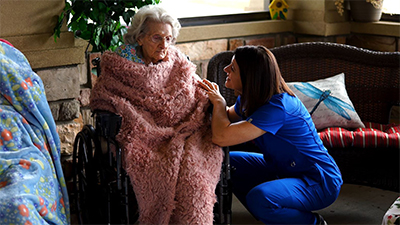
In small memory care homes, the safeguard is often the caretaker's memory and instinct. I have actually seen personnel catch the earliest signs of a urinary system infection merely due to the fact that "she is not humming with the music today." That type of observation just emerges when the same person is present over lots of days and weeks.
Balancing consistency with personnel wellbeing
There is a stress here that experienced senior care providers know well. The more you lock in assignments, the more you risk stressing out personnel who are coupled with homeowners whose requirements are extreme. Primary task to a resident who is physically aggressive or who calls out all night can take a toll.
The finest small homes deal with consistency as an assisting principle, not a rigid guideline. They aim to keep a stable core group around each resident, while still turning certain jobs or time blocks to provide caregivers breaks and cross-training. They likewise invest in training on dementia care techniques, body mechanics, and tension management, so personnel are not left white-knuckling through tough interactions.
For households, it is sensible to ask about both sides of this equation. Excessive rotation produces instability for locals. Insufficient can make staff feel trapped, which ultimately causes turnover, undoing the extremely consistency you were trying to protect.
What caretaker consistency appears like in respite care
Respite care is frequently ignored in this discussion. Households sometimes use short remain in a memory care setting to recover from caregiver burnout, travel, or test whether residential care is appropriate.
In large communities, respite homeowners may bounce in between whichever caretakers are totally free that day. Staff do their best, however the momentary nature of the stay can reduce the reward to construct deep familiarity.
Some small memory care homes approach respite care in a different way. They intentionally fold the respite guest into existing caretaker tasks. Even if the stay lasts just a couple of weeks, the very same 2 or 3 caregivers focus on finding out that individual's routines and preferences, simply as they would for a long-lasting resident.
This technique settles in a few methods. It often makes the shift less upsetting for the resident, who is already handling a brand-new environment. It also offers households a more precise picture of what ongoing memory care because home will feel like, since they see the genuine relationships forming, not a series of newbie interactions.
If you are exploring respite look after a loved one with dementia, it deserves asking how the home handles projects for short-stay citizens. The response will inform you a lot about the home's values.
Questions families can ask when touring small memory care homes
Families in some cases feel uncomfortable asking about staffing, as if they are challenging the home. Thoughtful operators really welcome these questions, since strong caregiver consistency is a point of pride.
Here are practical concerns that frequently open an efficient conversation:
- "The number of various caregivers would my mom generally see in a day and in a week?"
- "Do you appoint the exact same caretakers to the exact same homeowners the majority of the time, specifically for early mornings, evenings, and showers?"
- "What percentage of your caregivers have worked here longer than a year?"
- "How typically do you rely on company staff or floaters?"
- "If my dad does particularly well with one caregiver, can you try to keep that pairing as constant as possible?"
The exact numbers matter less than the clearness and self-confidence in the answers. A little home that values consistency will typically have concrete examples and data at hand.
When change is in fact helpful
Consistency ought to not become rigidness. There are moments when changing caregiver tasks is the most caring choice.

Sometimes, in spite of best efforts, a resident and a caretaker just do not "click." Their communication designs clash. Or an early negative interaction has actually inscribed so strongly that the resident reacts with worry every time that caretaker gets in the space. Requiring that relationship to continue in the name of consistency is not kindness.
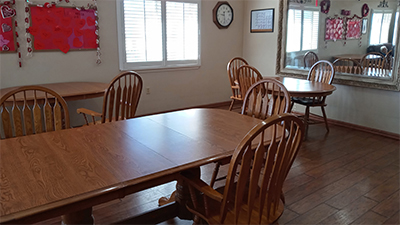
Health changes can likewise demand brand-new pairings. As a resident's requirements increase, it might make sense to pair them with a caregiver who has more physical strength or specialized training. In progressive dementia, different phases may require different skills.
The secret is to make changes thoughtfully, with clear interaction to both personnel and family, and then to restore brand-new patterns as quickly as possible. Chaos followed by stable new regimens is far better than ongoing low-level churn.
How consistency shapes the everyday rhythm of the home
The finest way to photo caregiver consistency is not as a statistic, however as a rhythm. In little memory care homes with strong, steady groups, the day unfolds with a peaceful predictability.
The same caretaker who understands which resident likes their coffee black and which insists on 2 creams is also the one who notices an emerging limp, or who remembers that Wednesday is video call day with a daughter out of state. Mealtimes feel less like a restaurant and more like a household table, because the people serving the food have served it hundreds of times to the very same faces.
Activities become deeper also. A constant caregiver leading a little group understands precisely which residents will join a sing-along and who prefers to fold towels close by, listening however not singing. That allows participation without pressure, which is important in dementia care.
In contrast, a home with frequent personnel modifications feels disjointed. The calendar may list plenty of programs, however citizens do not understand the person leading them. Small but crucial details slip: the preferred mug, the seat near the window, the peaceful ritual of cream on arthritic hands before bed. Those are the details that make an assisted living home feel like home instead of a hotel.
Bringing it back to what matters
Families choosing memory care, respite care, or assisted living for a loved one with dementia face no lack of marketing language. Every pamphlet mentions person-centered care, engaging activities, and safety. Caregiver consistency rarely gets bold print, yet it is one of the greatest predictors of how those pledges will play out.
In small memory care homes, consistent staffing can transform the experience for residents and families. It lowers anxiety, enhances interaction, boosts security, and protects dignity in everyday care. It likewise provides families identifiable people to trust, not simply a company's logo.
When you tour or review prospective homes, it helps to look beyond design, activities calendars, and even the nurse's credentials. Enjoy the way caretakers and residents connect, listen for within jokes, and ask who will in fact exist on a common Tuesday at 7 am and 7 pm.
Senior care, at its finest, is not about buildings or programs. It is about relationships, repeated often enough, with enough heart and ability, that even an individual whose memory is fading can feel, deep down, "These people understand me. And I am safe with them."
BeeHive Homes of Clovis provides assisted living care
BeeHive Homes of Clovis provides memory care services
BeeHive Homes of Clovis provides respite care services
BeeHive Homes of Clovis supports assistance with bathing and grooming
BeeHive Homes of Clovis offers private bedrooms with private bathrooms
BeeHive Homes of Clovis provides medication monitoring and documentation
BeeHive Homes of Clovis serves dietitian-approved meals
BeeHive Homes of Clovis provides housekeeping services
BeeHive Homes of Clovis provides laundry services
BeeHive Homes of Clovis offers community dining and social engagement activities
BeeHive Homes of Clovis features life enrichment activities
BeeHive Homes of Clovis supports personal care assistance during meals and daily routines
BeeHive Homes of Clovis promotes frequent physical and mental exercise opportunities
BeeHive Homes of Clovis provides a home-like residential environment
BeeHive Homes of Clovis creates customized care plans as residents’ needs change
BeeHive Homes of Clovis assesses individual resident care needs
BeeHive Homes of Clovis accepts private pay and long-term care insurance
BeeHive Homes of Clovis assists qualified veterans with Aid and Attendance benefits
BeeHive Homes of Clovis encourages meaningful resident-to-staff relationships
BeeHive Homes of Clovis delivers compassionate, attentive senior care focused on dignity and comfort
BeeHive Homes of Clovis has a phone number of (505) 591-7025
BeeHive Homes of Clovis has an address of 2305 N Norris St, Clovis, NM 88101
BeeHive Homes of Clovis has a website https://beehivehomes.com/locations/clovis/
BeeHive Homes of Clovis has Google Maps listing https://maps.app.goo.gl/SMhM3zbKaKgR1UAX6
BeeHive Homes of Clovis has TikTok page https://tiktok.com/@beehivehomes_clovis
BeeHive Homes of Clovis has Facebook page https://www.facebook.com/beehiveclovis
BeeHive Homes of Clovis has Instagram page https://www.instagram.com/beehivehomesclovis/
BeeHive Homes of Clovis has an YouTube page https://www.youtube.com/@WelcomeHomeBeeHiveHomes
BeeHive Homes of Clovis won Top Assisted Living Homes 2025
BeeHive Homes of Clovis earned Best Customer Senior Service Award 2024
BeeHive Homes of Clovis placed 1st for Senior Living Communities 2025
People Also Ask about BeeHive Homes of Clovis
What is BeeHive Homes of Clovis Living monthly room rate?
The rate depends on the level of care that is needed. We do a pre-admission evaluation for each resident to determine the level of care needed. The monthly rate is based on this evaluation. There are no hidden costs or fees
Can residents stay in BeeHive Homes until the end of their life?
Usually yes. There are exceptions, such as when there are safety issues with the resident, or they need 24 hour skilled nursing services
Do we have a nurse on staff?
No, but each BeeHive Home has a consulting Nurse available 24 – 7. if nursing services are needed, a doctor can order home health to come into the home
What are BeeHive Homes’ visiting hours?
Visiting hours are adjusted to accommodate the families and the resident’s needs… just not too early or too late
Do we have couple’s rooms available?
Yes, each home has rooms designed to accommodate couples. Please ask about the availability of these rooms
Where is BeeHive Homes of Clovis located?
BeeHive Homes of Clovis is conveniently located at 2305 N Norris St, Clovis, NM 88101. You can easily find directions on Google Maps or call at (505) 591-7025 Monday through Sunday 9:00am to 5:00pm
How can I contact BeeHive Homes of Clovis?
You can contact BeeHive Homes of Clovis by phone at: (505) 591-7025, visit their website at https://beehivehomes.com/locations/clovis/ or connect on social media via TikTok Facebook or YouTube
Take a drive to Cotton Patch Cafe. Cotton Patch Café serves homestyle comfort food suitable for assisted living, memory care, senior care, elderly care, and respite care family meals.